
Where to Go Fossil Hunting
on the Jurassic Coast
The Jurassic Coast, a UNESCO World Heritage Site, is one of the world’s most exciting fossil-hunting destinations. Stretching 95 miles along England’s southern coast, this ancient shoreline reveals an incredible timeline of prehistoric life. From the sunbaked deserts of the Triassic period to the deep tropical seas of the Jurassic and the chalky landscapes of the Cretaceous, each section of coastline holds fascinating fossils just waiting to be discovered. Whether you’re a seasoned fossil hunter or a first-time explorer, this is the ultimate place to step back in time and uncover the secrets of Earth’s past.
Triassic Period (252–201 Million Years Ago)
The oldest rocks on the Jurassic Coast date back to the Triassic period. During this time, the area was a desert landscape. Fossils from this era are less common but include early reptiles and amphibians.
Key Locations:
- East Devon Coast: The red sandstone cliffs around Sidmouth and Budleigh Salterton are characteristic of the Triassic period. While fossils are rare, occasional finds include reptile footprints and bones.
Jurassic Period (201–145 Million Years Ago)
The Jurassic period is renowned for its rich marine life, as the area was submerged under a warm, shallow sea. Fossils from this time are abundant and well-preserved.
Key Locations:
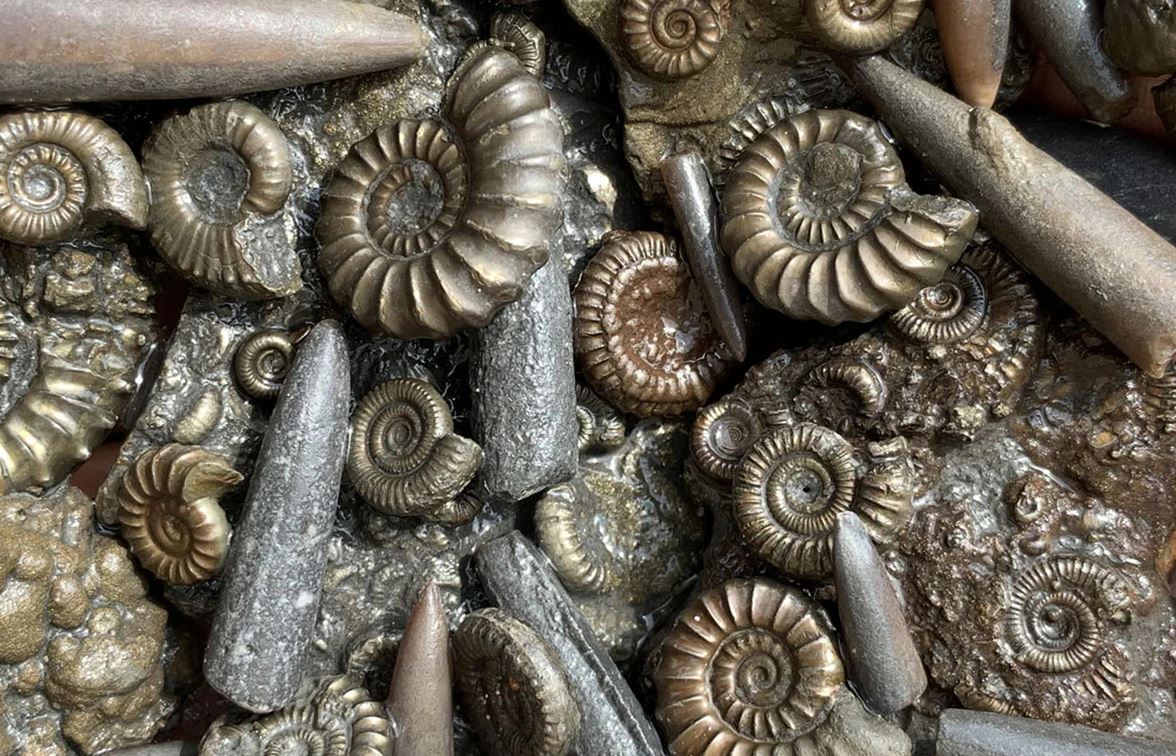
Lyme Regis: Known as the fossil capital of England, Lyme Regis offers an array of marine fossils, including ammonites, belemnites, and the remains of marine reptiles like ichthyosaurs and plesiosaurs. Monmouth Beach is particularly famous for its ammonite pavements.
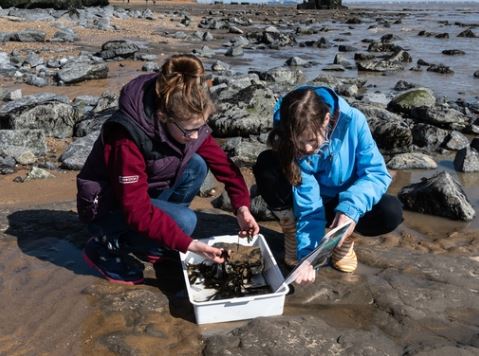
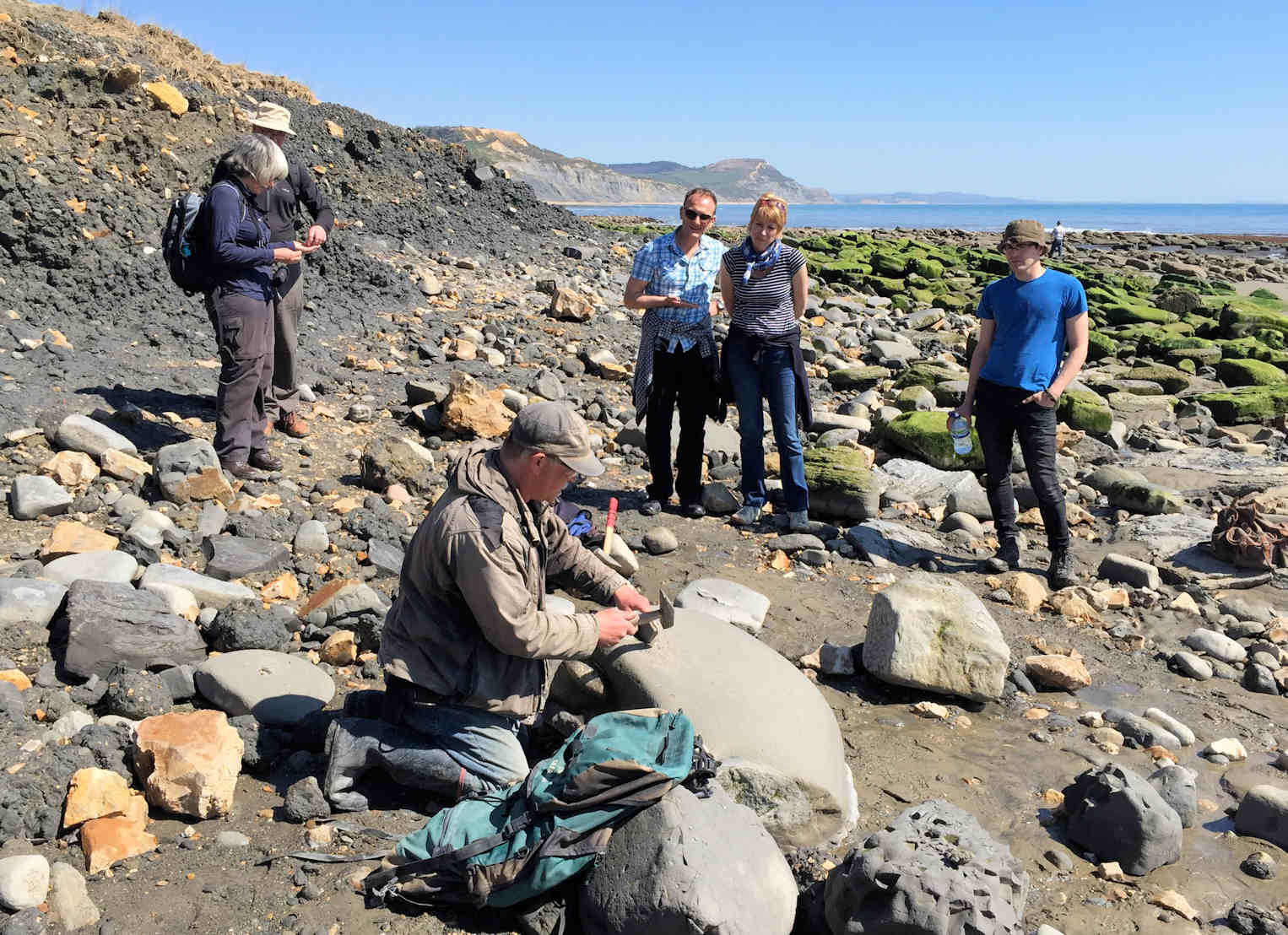
Charmouth: Just east of Lyme Regis, Charmouth Beach is another hotspot for Jurassic fossils. The cliffs and beach regularly yield ammonites, belemnites, and occasional vertebrate remains. The Charmouth Heritage Coast Centre offers guided fossil hunting walks, enhancing the experience for enthusiasts.
Cretaceous Period (145–66 Million Years Ago)
The Cretaceous period saw the area covered by swamps and later shallow seas, leading to the deposition of chalk and the preservation of diverse fossils.
Key Locations:
Kimmeridge Bay: Famous for its oil-rich shale, Kimmeridge Bay’s cliffs date back to the Late Jurassic and Early Cretaceous periods. Fossils include various marine reptiles and ammonites. The Etches Collection museum in the nearby village showcases an impressive array of local finds.
Isle of Portland: The Portland limestone, formed during the Late Jurassic to Early Cretaceous periods, contains numerous fossils, including those of molluscs and occasional vertebrates. The coastal exposures provide a continuous sequence of rock formations, offering insights into the Earth’s history.
Home to the World's First Fossil Discovery
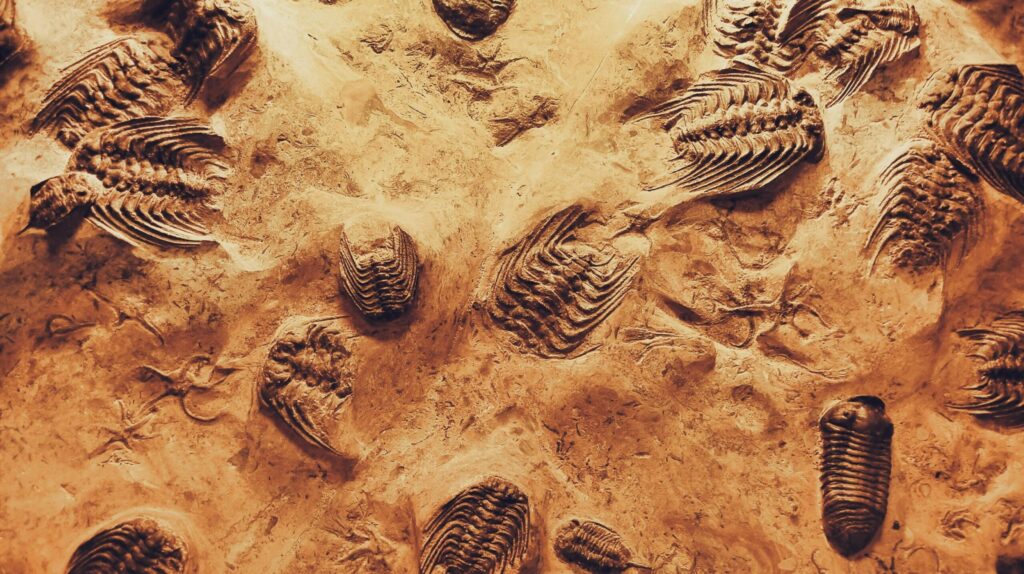
Did you know the Jurassic Coast is where the world’s first scientifically documented dinosaur fossil was discovered? In 1811, 12-year-old Mary Anning unearthed the skeleton of an ichthyosaur in the cliffs of Lyme Regis, sparking a revolution in paleontology. Today, the Jurassic Coast remains one of the best places in the world to hunt for fossils, with its cliffs revealing ancient marine reptiles, ammonites, and even dinosaur footprints. Whether you’re a budding fossil hunter or simply curious about Earth’s prehistoric past, the Jurassic Coast offers a unique opportunity to walk in the footsteps of giants—literally!
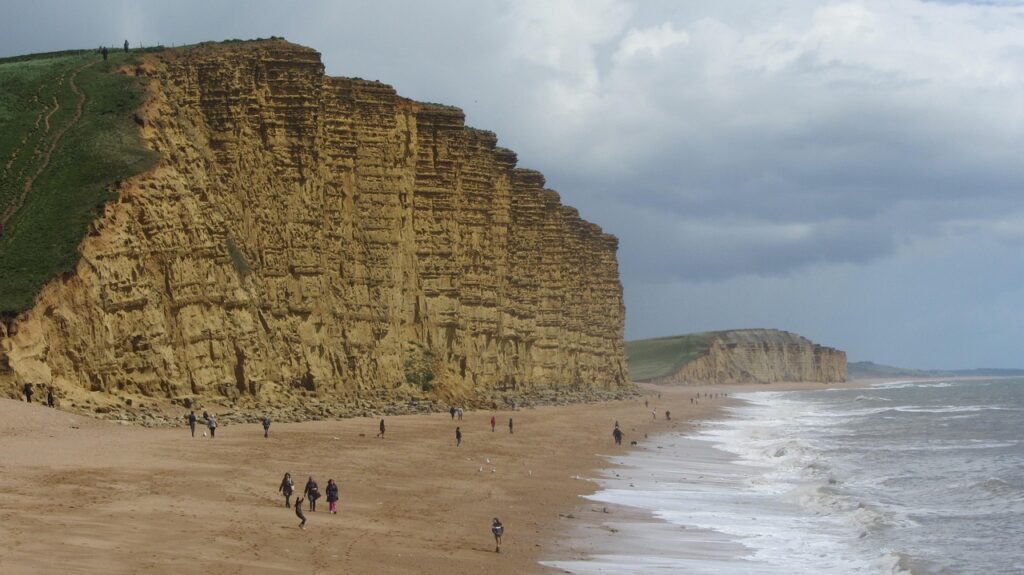
A Geological Masterpiece
The Jurassic Coast isn’t just famous for its fossils—it’s also a geological wonder! This 95-mile stretch of coastline showcases an almost continuous sequence of rock formations spanning 185 million years, representing the Triassic, Jurassic, and Cretaceous periods. From the vibrant red cliffs of Budleigh Salterton to the iconic limestone arch of Durdle Door, each layer tells a story of ancient deserts, tropical seas, and shifting continents. It’s like flipping through the pages of Earth’s history, making the Jurassic Coast a paradise for geologists and nature lovers alike.
One of the most common additions people make to their cars in order to keep the heat out is a windshield visor. Cars become warm in the summer because direct sunlight enters in through the windows. This is why we park in the shade whenever we can. Since the largest windshield.In fact, wind is becoming cheap enough in many places in the U.S. and around the world to compete effectively with fossil fuels.
One of the most common additions people make to their cars in order to keep the heat out is a windshield visor. Cars become warm in the summer because direct sunlight enters in through the windows. This is why we park in the shade whenever we can. Since the largest windshield.In fact, wind is becoming cheap enough in many places in the U.S. and around the world to compete effectively with fossil fuels.
One of the most common additions people make to their cars in order to keep the heat out is a windshield visor. Cars become warm in the summer because direct sunlight enters in through the windows. This is why we park in the shade whenever we can. Since the largest windshield.In fact, wind is becoming cheap enough in many places in the U.S. and around the world to compete effectively with fossil fuels.

95 FF3, App Street Avenue
NSW 96209, Canada
Mon – Fri: 8:00 am – 6:00 pm
Useful Links
City News & Updates
The latest Egovt news, articles, and resources, sent straight to your inbox every month.